Aaron Ellison & Eric ZeiglerLaCalle Chesapeake Galleryon view June 15th – September 17th, 2026reviewed July 2026
When a tree falls in the woods and no one is around to hear it, does it make a sound? If we stop perceiving the natural wonders on this Earth, are they unaffected by our actions? instability seeks to answer this vital question, and you may not like the answer.
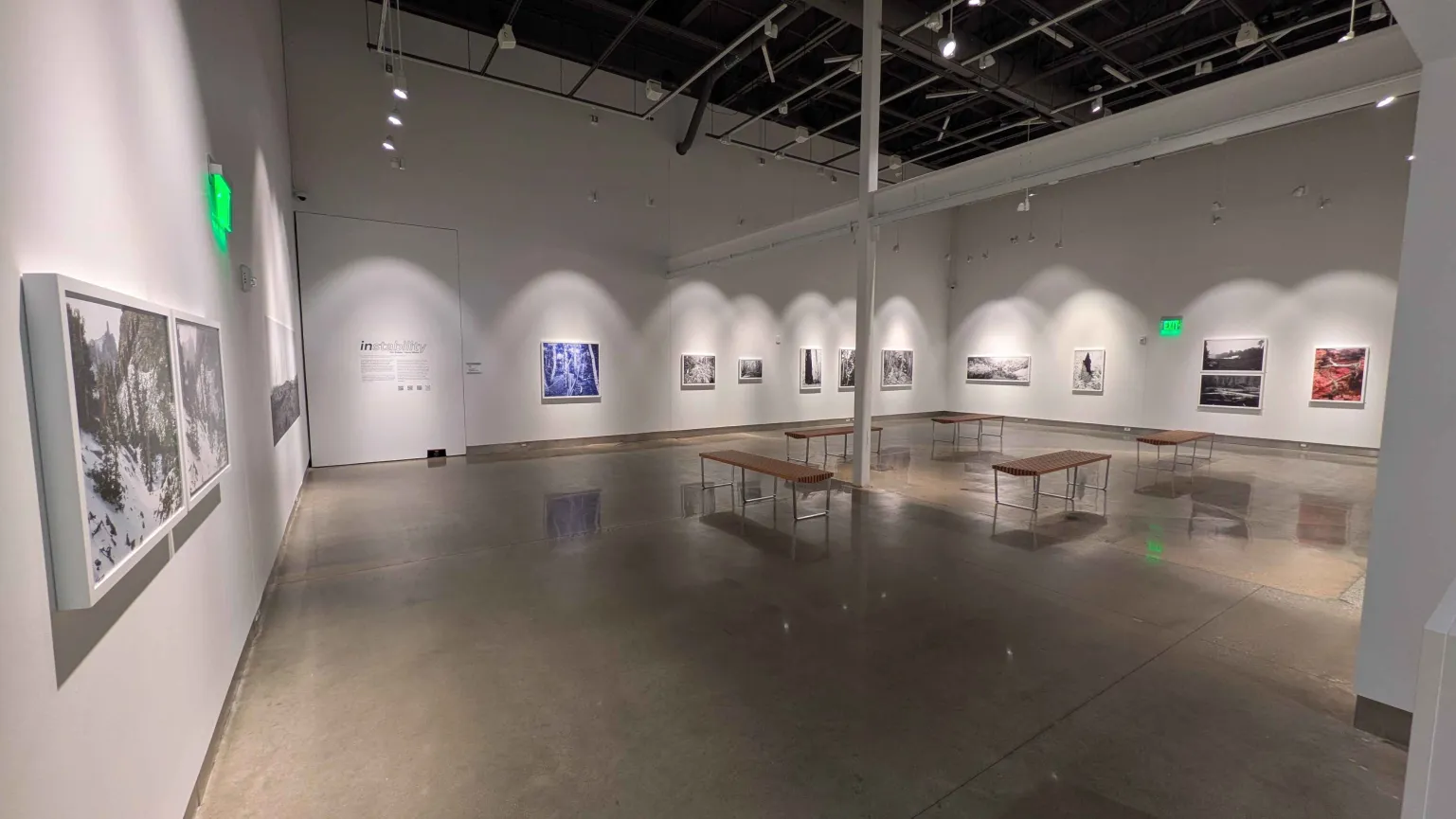
This large scale photographic show is a decade-long collaboration that blurs the lines of science and art. 17 pieces that all explore the ever shifting nature of areas we deem as 'preserved'. The new LaCalle Chesapeake Gallery at Harford Community College gives this exhibition the room it needs to breathe.
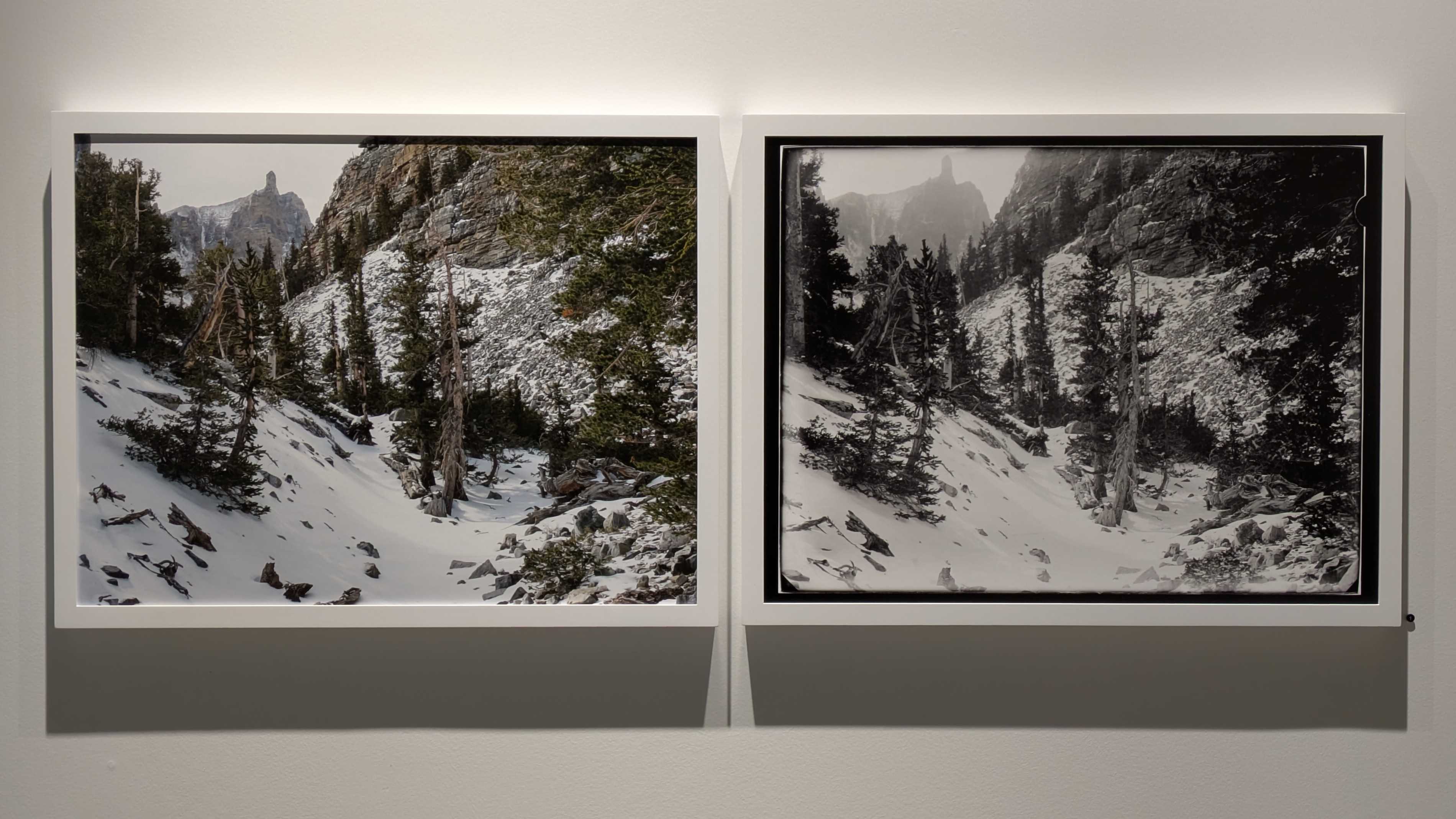
The first piece you come across is a diptych comparing the seen vs unseen, and highlights the rare collodion techniques employed. The artists give us a view from the base of a promontory, with another clifs edge in the distance, almost as a warning to behold. This view from the bottom highlights the centuries of erosion, a great rocky ridge turned to pebbles.
Aaron Ellison & Eric Zeigler, Promontory, instability, LaCalle Chesapeake Gallery, 2026. Photo: Stephen Paul La Rocca.
Did you hear it?
Well, maybe you can't hear it in the quiet of the gallery. Yet to me the image whispers the tale of time. The inevitable nature of decay. Whether or not we leave these areas 'untouched' they begin to crumble. Our actions as the human race quicken the decline even if we aren't around to see it. Instead of providing us with only spectacular displays, the artists ground us in the thick of the unkempt brush.
blurs the lines of science and art
Not only do these images offer views often unseen - they show us them in different ways. The artists employ almost the full spectrum of light. On display is visible light, ultra violet, and infrared. The visible is what we all see, while UV and IR challenge our perception. UV shows us the invisible, patterns appear that are meant for animals not humans. IR goes even deeper, with living cells bouncing back light while dead ones absorb it.
Installation view, instability, LaCalle Chesapeake Gallery, 2026. Photo: Stephen Paul La Rocca.
These large scale works allow the viewer to be immersed in the scenery. You can spend a long time staring at each work, finding new details throughout.
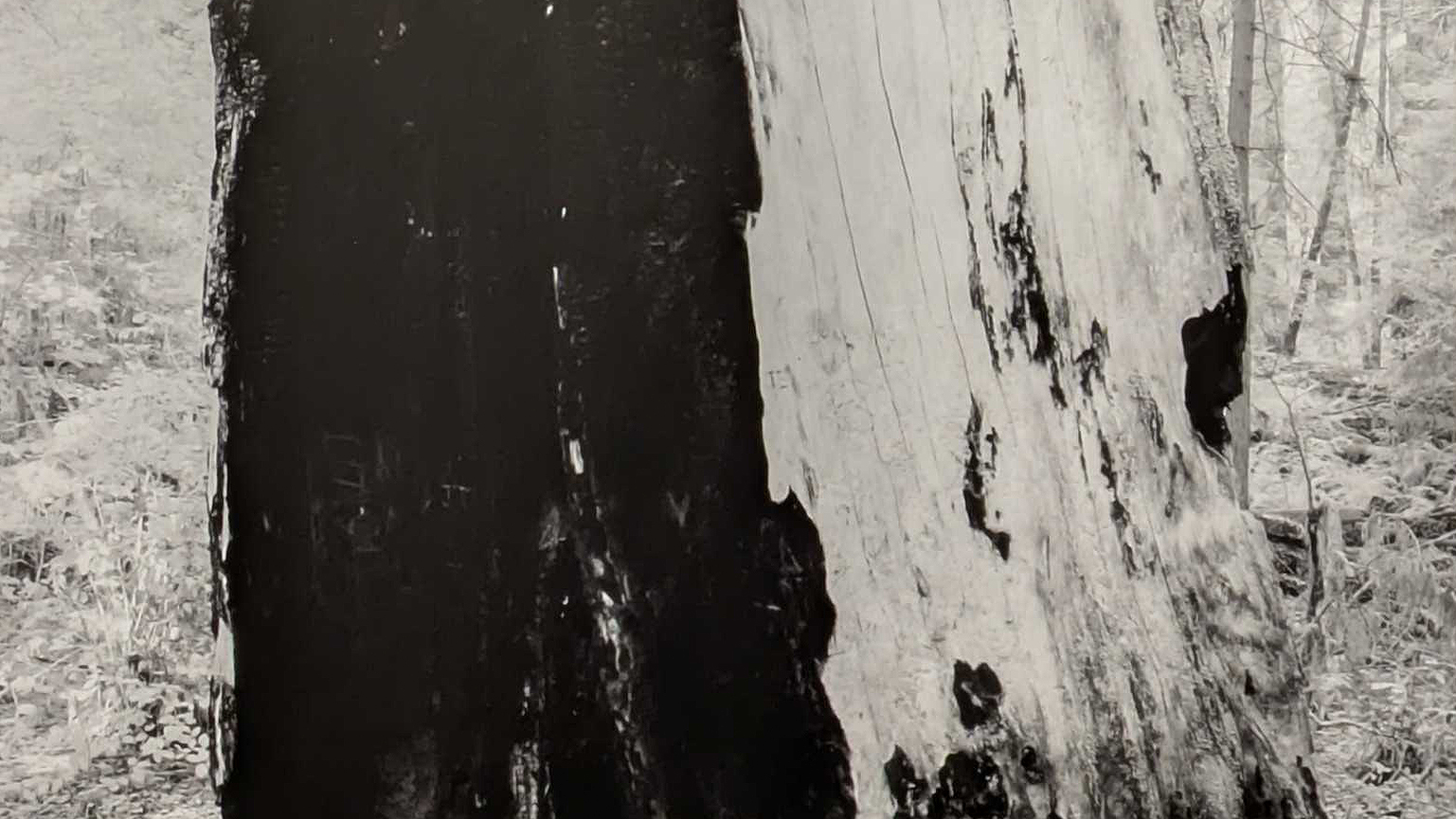
The weakness of the show is actually one of its strengths. From the surface viewers may just see simple landscape photos. As the viewer takes more time with each work they realize the technique, craft, and knowledge displayed is outstanding.
Detail shot, Black & White Coastal Redwood, 2026. Photo: Stephen Paul La Rocca.
The message lands, even the places we hold special and preserve are in danger. This show is for anyone who cares deeply for our planet, or anyone who loves nature and photography. If you want to get lost in beautiful large scale photographs it is certainly worth the drive.
The Verdict
Highly recommended. See it.
instability · LaCalle Chesapeake Gallery, Bel Air · through September 17th, 2026 · free